

What Carrey, Oprah & Phelps Know About Your Brain
When Jim Carrey talks about writing himself a $10 million check when he was broke, most people hear a cute story about the power of positive thinking. When Oprah mentions her vision boards, it sounds like daytime TV advice you'd get between commercial breaks. And when the most decorated Olympian in history credits his nightly mental rehearsals for winning 28 medals, it's easy to file it under "athlete superstition."
I get it. Two years ago, if you'd asked me about visualization, I would have politely dismissed it as something for people with more crystals and fewer quarterly earnings reports. I'm a senior executive. I deal in strategy, numbers, and measurable outcomes. Imagining myself successful while actual work needed doing? That sounded like a remarkably efficient way to accomplish absolutely nothing.
But here's what actually happened in all three of these cases: They weren't doing magic. They weren't even doing what most people think they were doing. They were—whether they knew it or not—systematically reprogramming their subconscious operating system using a specific neurological mechanism.
And once you understand that mechanism, the whole thing stops looking like woo-woo and starts looking like a competitive advantage you'd be foolish to ignore.
The Three Stories (And What They Actually Did)
Let me lay out what really happened in each case, because the details matter.
Jim Carrey's $10 Million Check
In the early 1990s, Jim Carrey was a struggling comedian. Not "struggling artist who's actually doing fine"—genuinely struggling. Unknown. Broke. Uncertain if he'd ever make it.
So he did something that sounds absurd: He wrote himself a check for $10 million for "acting services rendered" and dated it into the future. He kept it in his wallet, pulling it out regularly to look at it.
But here's the part most people miss: He didn't just look at a check and wait for money to appear. Every night, he'd drive up to Mulholland Drive in Los Angeles—the neighborhood where Hollywood's biggest stars lived—and sit there in his car. He'd look out over the city and spend time vividly imagining what it would feel like to be a successful actor.
Not imagining trying to become successful. Imagining already being successful.
He visualized directors calling him, offering him roles. People he respected telling him, "I like your work." Living the life he wanted. He'd rehearse these scenes in his mind until they felt real, until his nervous system couldn't quite tell the difference between the visualization and reality.
But he also kept showing up. Performing at comedy clubs. Taking whatever roles he could get. Doing the actual work.
The remarkable outcome: A few years later, he landed the lead role in Dumb and Dumber. His paycheck? Exactly $10 million.
Oprah's Vision Board and the Obama Inauguration
Oprah Winfrey is one of the most successful media entrepreneurs in history. She built a self-made billionaire empire from poverty and abuse. And throughout her journey, she's been vocal about using vision boards—collages of images representing what you want to create in your life.
The famous example: In 2008, during the presidential campaign, Michelle Obama encouraged a crowd to "envision Barack Obama taking the oath of office." Oprah went home and created a vision board. On it, she placed two things: a picture of Barack Obama and a picture of the exact dress she wanted to wear to the inauguration.
Both manifested. Obama won. Oprah attended the inauguration wearing that dress.
But here's what Oprah emphasizes—and what separates her from people who just make pretty collages and hope: "Visualization works if you work hard." She didn't just look at pictures. She built her career through relentless action, strategic decisions, and massive effort. The vision board wasn't a replacement for work. It was a tool that aligned her subconscious focus with her conscious goals.
Interestingly, in a 2018 interview, Oprah said she doesn't use vision boards anymore. Why? "I'm a powerful manifestor." Not because she thinks she has magic powers, but because she's internalized the process. Her brain is now wired to automatically filter reality for opportunities aligned with her vision. She doesn't need the external reminder anymore—the operating system upgrade is complete.
Michael Phelps' Mental Rehearsals
Michael Phelps is the most decorated Olympian in history: 28 Olympic medals, 23 of them gold. And while his physical training was legendary, his coach Bob Bowman credits a significant portion of that success to something Phelps did outside the pool.
Every single night before bed, Phelps would mentally rehearse his races. Bowman called these "videotapes." Phelps would lie in bed and swim the race in his mind—seeing every stroke, feeling the water, hearing the crowd, experiencing the race in vivid sensory detail.
But here's the sophisticated part: Phelps didn't just visualize perfect races. He created a mental library of every possible scenario. Equipment malfunctions. Technical glitches. Water getting in his goggles. Legs cramping. Being behind. He rehearsed how he'd respond to each challenge, so that if anything went wrong, his brain would recognize it as familiar rather than panic-inducing.
The legendary payoff came at the 2008 Beijing Olympics. During the 200-meter butterfly final, Phelps' goggles filled with water, completely blinding him for the final 75 meters of the race. He couldn't see the wall. He couldn't see his competitors. He was swimming blind in an Olympic final.
He won gold and set a world record.
How? Because he'd mentally rehearsed that exact scenario hundreds of times. When it actually happened, his nervous system didn't register it as a crisis. It registered it as "Situation #47 from the videotapes." He stayed calm, counted his strokes based on muscle memory, and executed perfectly despite being unable to see.
As Bowman explains: "By the time Michael gets up on the blocks to swim in the World Championships or Olympics, he's swum that race hundreds of times in his mind before he gets up there."
Why This Actually Works (And It's Not What You Think)
Here's where we move from inspirational anecdotes to actual neuroscience.
All three of these people—whether they knew the technical terms or not—were leveraging the same brain mechanism: accessing alpha brainwave states to reprogram subconscious patterns.
Your brain operates at different frequencies:
Beta (13-30 Hz): Your normal waking consciousness. This is you reading this article, analyzing it, planning your day. This is where your conscious mind lives.
Alpha (8-13 Hz): A relaxed yet alert state. This is where your conscious and subconscious minds can actually communicate. The critical faculty—the gatekeeper that maintains your existing beliefs and filters out contradictory information—softens. New programming can slip through.
Theta (4-8 Hz): Even deeper. Deep meditation, dreaming, highly creative states. Your subconscious is running the show.
When Carrey drove up to Mulholland Drive and relaxed into his visualizations, he was shifting from beta to alpha. When Phelps lay in bed rehearsing his races, same thing. When Oprah looked at her vision board and allowed herself to feel into that future reality, same mechanism.
In alpha state, something remarkable happens: Your brain cannot reliably distinguish between a vividly imagined experience and an actual experience. Neuroimaging studies confirm this. When you mentally rehearse an action in sufficient detail, you activate many of the same neural pathways as if you were physically performing that action.
This is called "functional equivalence," and it's why mental practice creates measurable changes in the brain.
Every time Phelps mentally swam a race, he was strengthening the neural pathways associated with perfect technique. Every time Carrey imagined directors respecting his work, he was building neural networks that supported confidence and professional excellence. Every time Oprah looked at that dress, she was programming her reticular activating system—the brain's filter for what's important—to notice opportunities aligned with attending that inauguration.
They weren't just thinking positive thoughts. They were literally installing new neural circuitry.
And here's the crucial part: Neurons that fire together, wire together. Repetition creates myelin—insulation around neural pathways that makes them faster and more automatic. The more you activate a pattern, the more it becomes your brain's default response.
This is how Olympic athletes improve performance through visualization. It's how surgeons rehearse complex procedures mentally. It's how musicians perfect challenging passages without touching their instruments.
And it's exactly how you can transform your identity from "person trying to achieve something" to "person who naturally embodies that achievement."
Mapping to The Thrive Framework
If you read my approach, you'll recognize that these three—entirely independently—followed the same five-step process.
Step 1: Think From the End
They didn't visualize the journey. They didn't imagine trying to get what they wanted. They visualized having already achieved it and looked backward.
Carrey didn't imagine auditioning for roles. He imagined directors already wanting him, already living in the hills, already being paid $10 million. Oprah didn't imagine hoping to attend the inauguration—she placed herself there, wearing a specific dress. Phelps didn't visualize trying to win—he mentally experienced the gold medal already around his neck, the world record already set.
This is what Neville Goddard called "living in the end." Your brain needs a clear destination. Not "I hope to get there someday" but "I am already there—what does this feel like?"
Step 2: Harmonize Your Energy
Your nervous system has to believe the vision is safe and achievable, not threatening or fantastical.
Carrey explicitly said the visualization "made me feel better." He was calming his nervous system, creating emotional alignment with his vision. Phelps' nightly rehearsals served the same function—they made competition feel familiar rather than terrifying. Oprah's vision board practice created a sense of possibility and alignment rather than desperate striving.
When your nervous system is in fight-or-flight mode, your brain cannot process new possibilities. It's locked into survival patterns. The relaxation component of visualization—the alpha state access—is what creates the neuroplastic conditions where change becomes possible.
Step 3: Rehearse the Vision
This is where they spent the most time, and it's the step most people skip.
Carrey: Every night, driving to Mulholland Drive, running the mental movies. Phelps: Every night before bed, swimming the races mentally, hundreds of times. Oprah: Regularly looking at her board, feeling into the reality of what she'd placed on it.
They were installing the neural pathways through repetition. Not occasionally. Not when they felt like it. Systematically, consistently, building the wiring that would make the new reality automatic.
Step 4: Integrate the Identity
Here's the part that separates them from people who just daydream: They made daily choices aligned with the identity they were becoming.
Carrey kept performing, kept taking roles, kept showing up as a professional actor even when he was unknown. Oprah built her empire through relentless strategic action. Phelps trained harder than anyone else in the pool—the mental rehearsal amplified his physical training, it didn't replace it.
They asked themselves—consciously or unconsciously—"What would the version of me who has already achieved this do right now?" And then they did that.
Small choices, repeated daily, that bridged the gap between who they were visualizing themselves to be and who they actually were.
Step 5: Embody the Reality
Eventually, it became automatic. The check materialized. The inauguration happened. The gold medals stacked up.
But more importantly, the internal transformation was complete. They weren't trying to become those people anymore. They had become them. The thoughts, feelings, and behaviors that once required effort now happened naturally.
Their reticular activating systems had fully reprogrammed. They saw different opportunities, made different choices, attracted different circumstances—because they were filtering reality through a different identity.
The Critical Mistake Most People Make
Here's where most people who try visualization completely miss the point:
Visualization without action is just daydreaming. Action without visualization is grinding uphill against your own programming. The combination is what creates the operating system upgrade.
When Carrey was asked about his visualization practice on Oprah's show, she made this exact point: "Visualization works if you work hard."
His response? "Well, yeah. That's the thing, you can't just visualize and then, you know, go eat a sandwich."
Most people do one of two things:
They visualize but don't take action. They make vision boards, they imagine their perfect life, they feel good for a moment... and then nothing changes because they're not actually integrating the new identity through behavior.
They take massive action but never reprogram their subconscious. They set goals, they work hard, they use discipline and willpower... but they're fighting against their own internal programming the entire time. It's exhausting, and eventually, the autopilot wins.
The magic—if we can call it that—is in doing both simultaneously.
Use alpha state visualization to install new neural pathways. Then, in your daily waking life, make choices that align with and strengthen those pathways. The visualization gives you the blueprint. The action makes it real.
Your conscious mind sets the direction. Your subconscious makes it automatic. You need both.
Your Ten-Minute Experiment
Look, I understand if you're skeptical. I was, too. The language around this stuff sounds like it was written by someone who owns too many dreamcatchers and not enough spreadsheets.
But here's what I'd suggest: Treat this as an experiment, not a belief system.
Try this for 30 days:
Choose one clear desired outcome. Not ten. One. Something specific enough to visualize but meaningful enough to matter.
Spend 10-15 minutes daily in a relaxed state. You don't need to be a meditation expert. Just sit quietly, close your eyes, take some deep breaths until you feel calm. That's alpha state access—right there.
Mentally rehearse your desired outcome as already real. Not "I hope to achieve this." Not "I'm working toward this." Imagine it's already done. See it. Feel it. What does it feel like in your body to have this? What do you see around you? Be in that reality.
Throughout your day, ask one question: "What would the version of me who already has this choose to do right now?" Then do that thing.
Notice what shifts. Don't force anything. Don't judge yourself if you forget or skip a day. Just observe what changes over the 30 days.
That's it. Carrey's check. Phelps' videotapes. Oprah's vision board. Same mechanism, different forms.
The practices I share on this site—meditation, visualization, breathwork, sound technologies like binaural beats—are all just different doorways into the alpha state where this reprogramming happens. Find what works for you. Be eclectic. Be a seeker, not a believer.
Because thriving isn't about chasing external achievements through sheer force of will. It's about becoming the person who naturally embodies what you want—and letting your neurology do the heavy lifting.
The person you're becoming already exists in potential. Your brain just needs the right operating instructions to make it your default reality.
Now you know how to install them.
Ready to dive deeper? Explore my framework, or check out the specific practices—meditation techniques, visualization protocols, breathwork methods—that give you reliable access to the alpha state where transformation actually happens.
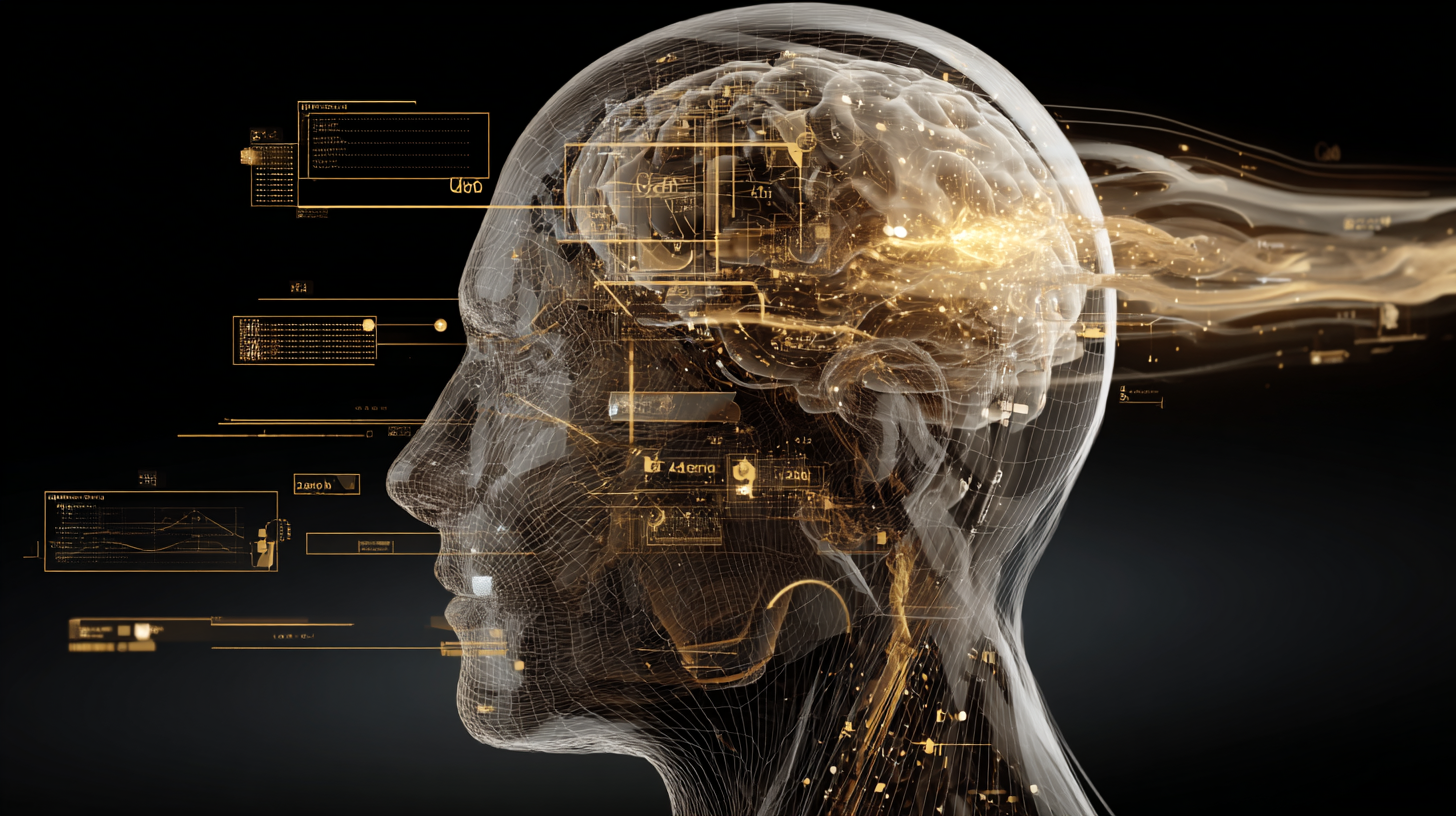
Visualization isn't positive thinking. It's an operating system upgrade for your brain.
Michael Hofer