
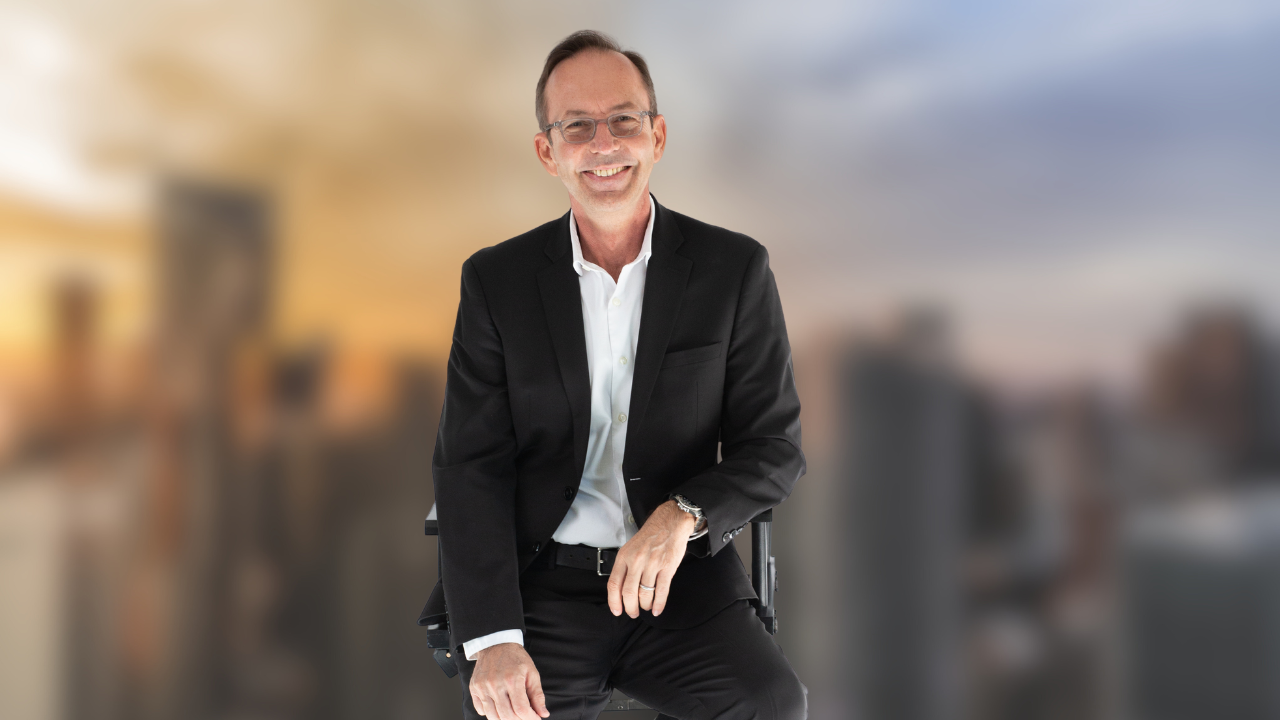
My Journey: From Skeptical Executive to Thriving with a 5.5 A1c
A few years ago, if you'd suggested I spend 10 minutes a day meditating with my morning coffee, I would have thanked you politely and gone back to my spreadsheets. Meditation? Visualization? That was for people who had time to sit cross-legged, while the rest of us were running companies and managing quarterly targets.
I'm a CFO. I deal in numbers, strategy, and measurable outcomes. For over 40 years, I've managed type 1 diabetes with the same analytical approach I bring to everything: data, discipline, and determination. And for 40 years, my A1c—the key marker of blood sugar control—hovered in a range where you're doing okay but never quite achieving what you know is possible.
But I'm also curious. And when everyone around me kept talking about mindfulness and meditation—athletes, entrepreneurs, people I respected—I thought: "Why not? Let me just try it and see what happens."
I had no idea that decision would fundamentally change not just my diabetes management, but my entire approach to life.
The Calm App and My Coffee: An Accidental Discovery
I started simple. I downloaded the Calm app and committed to 10 minutes a day—nothing dramatic, just sitting with my morning coffee and listening to a guided meditation before diving into emails and meetings.
I wasn't trying to achieve enlightenment. I wasn't even sure what I was trying to achieve. I just wanted to see if there was anything to all this mindfulness talk.
Within a few weeks, something surprising happened: my blood sugar numbers improved.
Not through any change in my insulin regimen. Not through dietary adjustments I hadn't already tried a hundred times. The numbers got better because I was managing stress differently.
Stress is terrible for blood sugar control—it triggers cortisol and adrenaline, which spike blood sugar. As an executive managing complex operations and high-stakes decisions daily, stress was my constant companion. I'd accepted it as the cost of the job.
But those 10 minutes with Calm were creating something I hadn't experienced in years: genuine relaxation. The kind where your nervous system actually shifts from fight-or-flight to rest-and-digest. And my blood sugar responded immediately.
That got my attention. If a simple daily practice could create measurable physiological changes, what else was possible?
Down the Research Rabbit Hole: Athletes and Visualization
My curiosity kicked into high gear. I started researching visualization practices, particularly after hearing multiple elite athletes credit mental rehearsal for their performance improvements.
Michael Phelps mentally swimming every race before bed. Jim Carrey visualizing his success before it happened. Oprah using vision boards. These weren't people prone to magical thinking—they were high performers using specific techniques to achieve concrete results.
The more I researched, the more the neuroscience made sense. Alpha brainwave states. Neural pathway activation. The brain's inability to distinguish between vividly imagined experiences and real ones. This wasn't mysticism—it was mechanism.
Eventually, I discovered Mindvalley and its flagship program, The Silva Ultramind System, with Vishen Lakhiani.
Honestly? I didn't believe in it. The language felt too... optimistic. Too "manifesty." But I'm curious, remember? So I signed up, thinking I'd either prove it was nonsense or discover something interesting.
The Dental Surgery That Changed Everything
The Silva Method teaches a specific approach to visualization: entering the alpha state and mentally rehearsing desired outcomes in vivid sensory detail. It felt strange at first—almost silly—but I committed to following the protocol exactly as taught.
I had a dental surgery scheduled—the kind of procedure that would typically send my stress levels (and blood sugar) through the roof. So I decided to use it as an experiment.
For several weeks before the surgery, I practiced the Silva technique. I visualized the entire experience: walking into the office calm and relaxed, sitting in the chair with steady breathing, and going through the procedure with complete composure. And most specifically, I visualized my continuous glucose monitor displaying exactly 120 mg/dL—not too high from stress, not too low from anxiety-induced insulin miscalculation. Perfect.
I rehearsed this scenario repeatedly in alpha state, feeling the calm in my body, seeing 120 on my monitor, and experiencing the successful outcome as if it had already happened.
The day of the surgery arrived. I checked my glucose as I entered the office: 120 mg/dL. Exactly.
Throughout the procedure, it stayed around that value. Stable. Calm. Just as I'd visualized.
I sat in my car afterward, staring at my glucose monitor. Coincidence? Maybe. But it was a pretty specific coincidence.
From Skeptic to Experimenter: Testing the Limits
I continued using the Silva Method for diabetes management. Visualizing stable blood sugar during stressful meetings. Rehearsing calm responses to unexpected challenges. Mentally practicing successful insulin dosing decisions.
And repeatedly—surprisingly—the results matched the visualization.
At first, I dismissed each success as a coincidence. Confirmation bias. Selective memory. I'm a numbers person; I needed more data points.
So I kept experimenting. Different situations. Different challenges. Different outcomes to visualize. And slowly, grudgingly, I had to accept what the data was showing me: this actually worked. Not every single time perfectly, but far more consistently than random chance could explain.
It took months for me to truly accept these weren't coincidences. They were replicable results from a replicable process.
Expanding the Toolkit: Beyond Silva
Once I accepted that the mechanism was real, I wanted to understand it more deeply and explore other approaches. I dove back into Mindvalley and discovered a wealth of different methodologies:
The House of Wellbeing - Combining hypnotherapy, affirmations, and meditations for targeted transformation
The Monroe Institute's Hemi-Sync technology - Using binaural audio to more easily access alpha and theta states
Qi Gong - Integrating movement, breath, and visualization for energy management
Various abundance and manifestation programs - Different frameworks for applying visualization to different life areas
I used Mindvalley as my testing ground, trying different approaches, then following up on the ones that resonated by diving into their dedicated websites and apps.
What I discovered: there's no single "perfect" approach. Different methods worked better for different situations and different aspects of life. I needed to become eclectic—to draw from multiple traditions and build something that worked specifically for me.
When I heard Sadhguru say "Be a seeker, not a believer," it crystallized exactly what I'd been experiencing. Don't adopt any single system wholesale. Listen to different teachers. Try different practices. Discover what actually produces results for you, and build your own framework from those elements.
That's how I developed The Thrive Framework—not from blind faith in any single method, but from systematic experimentation and integration of what actually worked.
The Results: Beyond What I Thought Possible
Once I had a systematic approach, I started applying it deliberately across different areas of my life. The results have been remarkable:
Diabetes Management
My A1c dropped to 5.5—a value typically seen only in people without diabetes. After 40+ years of managing type 1 diabetes, I achieved blood sugar control I didn't think was possible. Not through new medications or extreme dietary restrictions, but through combining standard medical management with systematic stress reduction and visualization practices. Read more about my approach here.
Fitness Performance
I visualized specific improvements in my workout metrics—target heart rates, recovery times, and endurance levels. I mentally rehearsed achieving new personal bests. And systematically, my performance improved beyond what I'd previously considered my natural limits. My average workout heart rate and recovery rates reached levels I'd assumed were simply beyond my genetic capacity.
Career Success
I started applying the framework to professional situations: important negotiations, high-stakes presentations, and career advancement opportunities. I'd visualize the desired outcome in an alpha state, then show up and execute with a calm confidence I hadn't previously experienced. The results spoke for themselves—successful negotiations that might have gone differently, presentations that landed with unexpected impact, and career progress that exceeded my previous trajectory. Read more about thriving in business on my other website.
Overall Health Markers
I expanded the practice to other health metrics: blood pressure, cholesterol levels, and general well-being. Using the same approach—visualization combined with appropriate action—I achieved steady values in ranges I'd thought were simply out of reach for my age and genetics.
What This Actually Looks Like: Reality Check
Let me be clear: this isn't magic, and it's not perfect.
I still have days where my blood sugar doesn't cooperate. I still have presentations that don't go as planned. I still face challenges and setbacks. Visualization didn't make me superhuman—it made me more effectively human.
What changed is this: I have a reliable tool for accessing states where transformation is possible. I can systematically reprogram unhelpful patterns. I can mentally rehearse desired outcomes in ways that actually prepare my nervous system and neural pathways for success. And when I combine that internal preparation with external action, my results consistently improve.
Am I at some final destination? Absolutely not. I consider myself at the beginning of this journey, still learning, still experimenting, still discovering what's possible.
But compared to where I was two years ago? The improvement has been extraordinary. Not because I found some magical solution, but because I discovered and systematically applied a set of practices that actually work—practices grounded in neuroscience, validated by my own results, and continuously refined through ongoing experimentation.
The Practice: What I Actually Do
People ask me what my daily practice looks like now. Here's the truth: it varies. Some days it's 10 minutes with Calm. Some days it's a full Silva Method visualization session. Some days it's Hemi-Sync audio while I work on a specific challenge. Some days it's Qi Gong in the morning.
The common thread is this: I've built a daily practice of intentionally accessing altered states of consciousness—alpha and theta brainwave frequencies—and using those states to install new programming, rehearse desired outcomes, and align my subconscious with my conscious goals.
And crucially, I follow that internal work with aligned external action. The visualization sets the autopilot. The action makes it real.
That's the formula. Everything else is just different tools for achieving the same basic mechanism.
Your Own Journey: Be a Seeker
If you're reading this and feeling skeptical, that's perfect. I was, too. In many ways, I still am. I constantly question, test, and verify. That's what makes the results meaningful—they're not based on belief, they're based on replicable outcomes.
My invitation to you is the same one I gave myself two years ago: Be curious. Try something. See what happens.
Start with 10 minutes a day—maybe with Calm, maybe with a simple breathing practice, maybe with the Silva Method. Pick one clear outcome you want to improve. Visualize it in the alpha state. Then take consistent action aligned with that vision.
Track your results. Be honest about what works and what doesn't. Adjust. Experiment. Build your own practice from what actually produces results for you.
You can explore the different approaches I've found helpful through my blog, where I continue to share what I'm learning and experimenting with. Not because I have all the answers, but because I'm still actively seeking—and the seeking itself is what creates the transformation.
The person you're becoming already exists as a possibility. Your brain just needs the right conditions to make that possibility your new default reality.
These practices create those conditions. The rest is up to you.

"The results didn't come from believing. They came from trying—and being willing to accept what actually worked."
Michael Hofer, Ph.D.