The Cost of Inaction: How to Use the Carrot and the Stick to Finally Make a Lasting Change

Most people already know what they should do.
They know they should exercise more, eat better, sleep earlier, meditate, have that difficult conversation, or start working on the thing they keep putting off. And yet — they don't. Not consistently. Not lastingly.
The usual prescription is more motivation. More inspiration. A better vision board. A shinier goal. And I understand the appeal. Visualization is powerful — neuroscience confirms that mental rehearsal activates the same neural pathways as the real experience. I've written extensively about this, and the five-step Thrive Framework I use in my own practice is built on this foundation.
But here's what most personal development content leaves out: motivation toward something is only half the equation.
The other half is the cost of not moving at all.
Why the Carrot Alone Isn't Enough
Humans are wired asymmetrically. Research in behavioral economics has confirmed what Tony Robbins has been teaching for decades: the pain of loss is felt roughly twice as strongly as the pleasure of an equivalent gain. That's not a flaw in your psychology — it's a feature. It kept your ancestors alive.
When we only sell ourselves on the dream — the leaner body, the thriving business, the peaceful mind — we're working with one hand tied behind our back. The vision is the carrot. Beautiful. Motivating. But distant.
The stick is the cost of inaction. And it's sitting right here, right now.
I call it the COI: the Cost of Inaction. It's a simple but underused question:
What will it cost me if I don't change?
Not in some vague, future sense. Specifically. Concretely. In health, relationships, finances, identity, and time.
When you answer that question honestly — and then pair it with a vivid visualization of your desired future — you're no longer just pulled toward something. You're also pushed away from something real and painful.
That's the full circuit.
When the COI Is Obvious — and Life-Saving
Let me start with the most extreme version, because it makes the mechanism impossible to ignore.
Imagine you wake up at 3 a.m. with crushing chest pain. Something is wrong. You know it. And in that moment, you face a choice: call the emergency services and go to the hospital, or wait and see. Nobody lies there calculating vision boards. They move. Fast. Because the Cost of Inaction is crystal clear: you might die.
The COI in this case isn't abstract. It's immediate, visceral, and impossible to rationalize away. It overrides every other consideration — the inconvenience, the embarrassment, the hope that it'll pass. The stick is so large that action becomes the only logical response.
This is the COI at full volume.
But here's the insight: the mechanism is identical at every scale. The same motivational architecture that gets someone into an ambulance at 3 a.m. is available for every other area of your life — if you're willing to get honest about what inaction is actually costing you.
The Everyday COI: Where Most Change Actually Happens
Few of us face life-or-death moments daily. But we face smaller versions of the same choice, constantly. And because the consequences aren't immediate, we underestimate them.
Let me give you a few examples I've encountered — in my own life and in conversations with people going through genuine transitions.
The executive who skips the gym for "just one more week." The COI isn't just a missed workout. It's the compounding cost: energy that declines quietly, cognitive performance that erodes, stress that finds no outlet, the slow erosion of the identity he's trying to inhabit. Five years of "just one more week" and the cost is a different person — one who barely remembers who he was trying to become.
The entrepreneur who doesn't have the difficult conversation with her co-founder. The COI isn't just today's tension. It's six months of misalignment, a product that drifts, a team that senses the divide, and eventually a partnership that collapses — along with the trust, the equity, and sometimes the friendship. One uncomfortable hour avoided becomes a year-long crisis.
The person with a chronic condition who keeps delaying the lifestyle change. I know this one personally. I've managed type 1 diabetes for over 40 years. Every day is a choice. The COI for staying in poor metabolic control isn't abstract — it's documented, it's real, and it compounds. The cost of inaction here isn't paid next month. It's paid in a decade. But it is paid.
The professional who keeps meaning to invest in their skills. The COI isn't the course they didn't take. It's the credibility gap that widens, the opportunities that go to someone else, the quiet confidence that never quite solidifies, and the slow drift from relevant to replaceable.
In every case, the cost is real. But because it arrives gradually — not all at once like a chest pain at 3 a.m. — we allow ourselves to defer it.
The first step is to make the COI visible.
The Two-Part Engine: COI + Visualization
Here's where the Thrive Framework comes in.
In my five-step approach, Step 1 is Think From the End — you imagine your desired reality as already accomplished and look backward from it. Step 3 is Rehearse the Vision — you enter the alpha state and install that future self in multisensory detail, making it feel familiar and real to your subconscious.
But I want to add something that makes both of those steps dramatically more effective: before you rehearse the vision, get honest about the cost of not being that person.
This is the carrot-and-stick sequence in practice:
First, face the stick. Ask yourself: What is the real cost of staying exactly where I am for another year? Another five years? What relationships suffer? What health markers drift? What opportunities close? What version of yourself gets further away? Write it down. Let it be uncomfortable. That discomfort is information, and it's fuel.
Then, turn toward the carrot. Now enter your visualization practice. See the version of yourself who made the change. Not the effort it took — the outcome. The energy you have. The way you move through a room. The decisions you make from that place. The relationships that feel different. Feel it as already real.
The COI creates urgency. The vision creates direction.
Without the COI, the vision stays pleasant but optional — a daydream you revisit when you feel ambitious. Without the vision, the COI just produces anxiety — a weight you carry without a path out of it.
Together, they create what I think of as motivational coherence: a clear reason to move, and a clear direction to move toward.
Why It Has to Be Daily — Not Once
Here's where most people get this wrong.
They read something like this, feel genuinely stirred, go home and write out their COI list, spend twenty minutes visualizing, feel great — and then life happens. Two weeks later, none of it is present. The urgency has faded. The vision is a half-remembered feeling.
That's not a failure of the method. It's a failure of frequency.
The subconscious doesn't update on inspiration alone. It updates on repetition. Myelin — the insulation around neural pathways that makes patterns automatic — doesn't build from single exposures. It builds from consistent, repeated activation over time.
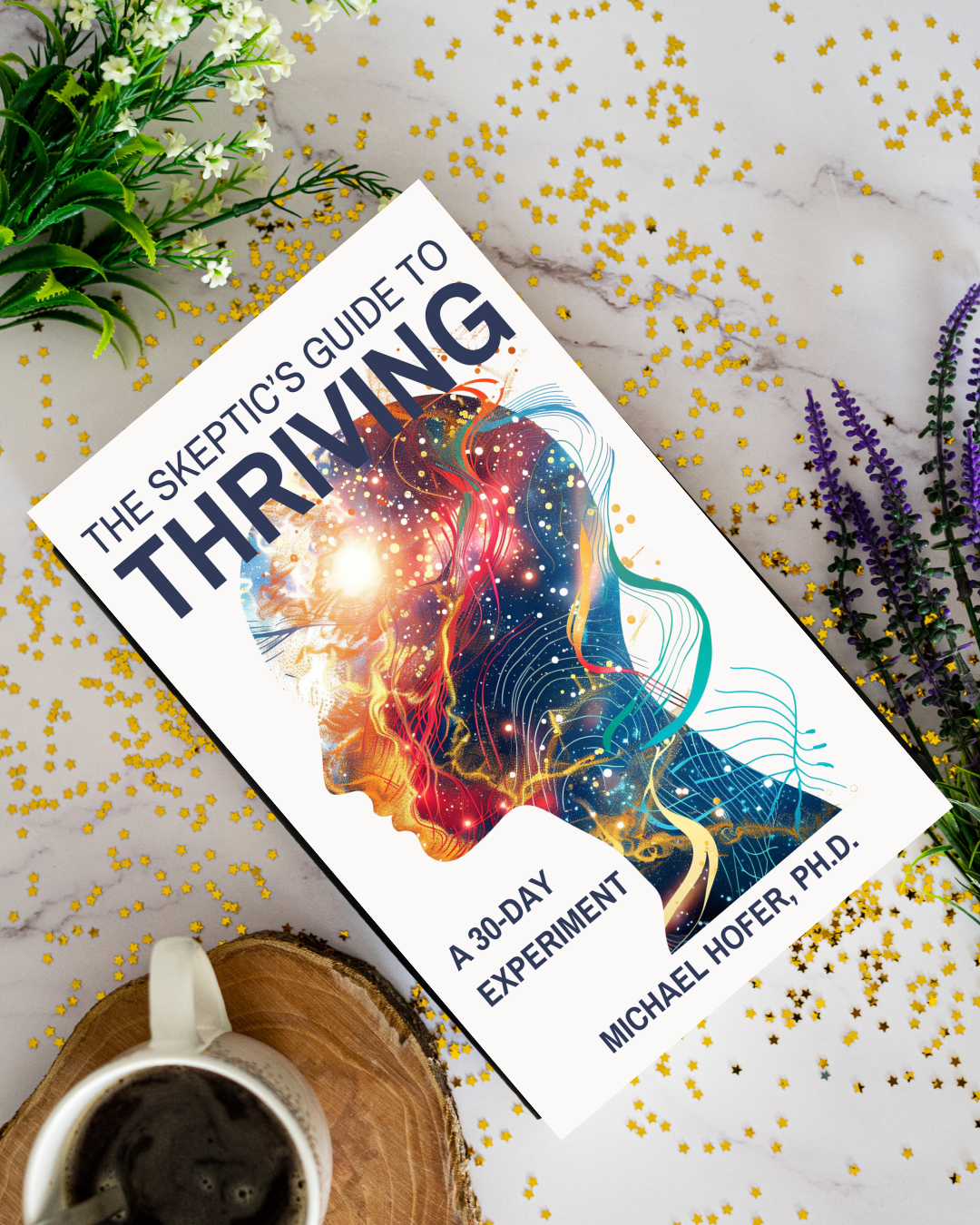
This is the whole basis of the 30-Day Experiment I outline in my book. Not because thirty days is a magic number, but because it's enough repetition to start creating new defaults.
So the practice isn't: do this once when you're feeling stuck.
The practice is: revisit both elements regularly — ideally daily.
A simple version of this might look like:
Two minutes each morning: read your COI statement. Let it land. Feel the gap between where you are and where you're headed if nothing changes.
Then, ten to fifteen minutes: enter your visualization practice in a relaxed, alpha-accessible state. Rehearse the version of you on the other side of the change.
That's it. Carrot and stick, every day, until the new identity becomes the default.
The Skeptic's Question
I know what some of you are thinking — because I would have thought the same thing a few years ago: Isn't this just manufactured anxiety? Am I supposed to scare myself into change?
Fair question. Here's my answer.
The COI isn't about manufacturing fear you don't feel. It's about removing the fog that hides the real cost of staying comfortable. Most people aren't oblivious to their inaction — they're just good at not looking directly at it. The COI is the practice of looking.
And the visualization isn't wishful thinking — it's neural rehearsal. You're not pretending things are different from what they are. You're training your brain to recognize the destination as familiar and safe, so the journey there feels less threatening to your subconscious.
Neither element is manipulation. Both are clarity.
A Practice to Try This Week
If you want to test this for yourself, here's where to start:
Pick one area of your life where change has felt elusive — health, career, relationships, finances, a creative project, a mindset pattern.
Write out your honest answer to this question: If I change nothing about this area for the next five years, what does that actually cost me? Don't soften it. Let yourself feel the real weight of that answer.
Then write out — or sit with — the vision of what's possible if you do make the change. Not the effort. The outcome. The version of yourself on the other side.
Revisit both tomorrow. And the day after.
That repetition is where lasting change lives.