I Usually Meditate 30 Minutes — Except When I'm Busy. Then I Meditate Two Hours.

It was 5:07 AM on a Tuesday, and I already knew the day would be relentless.
Back-to-back calls starting at 7. A board deliverable due by noon. Two decisions waiting on me that couldn't wait. I looked at my journal and my visualization notes — and felt the familiar pull to abbreviate. Just 15 minutes today. I'll go deeper tomorrow. I'm a CFO. I'm being practical.
And I did. I trimmed my morning practice from 45 minutes down to 15. I told myself it was the rational choice — protecting my output by managing my time.
But here's what I noticed by mid-morning: I was reactive in a way I rarely am. A comment in a meeting landed harder than it should have. A decision I usually make with confidence felt murky. The clarity I count on — the kind that comes from starting the day anchored in my vision rather than my inbox — wasn't fully there. I was busy all right. And I felt it.
That's when I remembered a saying I'd encountered years ago and promptly dismissed:
"I usually meditate 30 minutes. Except when I don't have time. Then I meditate two hours."
The first time I heard it, I thought it was charming nonsense. Now I think it's one of the most precise pieces of performance wisdom I've ever come across.
Here's why.
Your Autopilot Is Running the Show — And It Doesn't Take Days Off
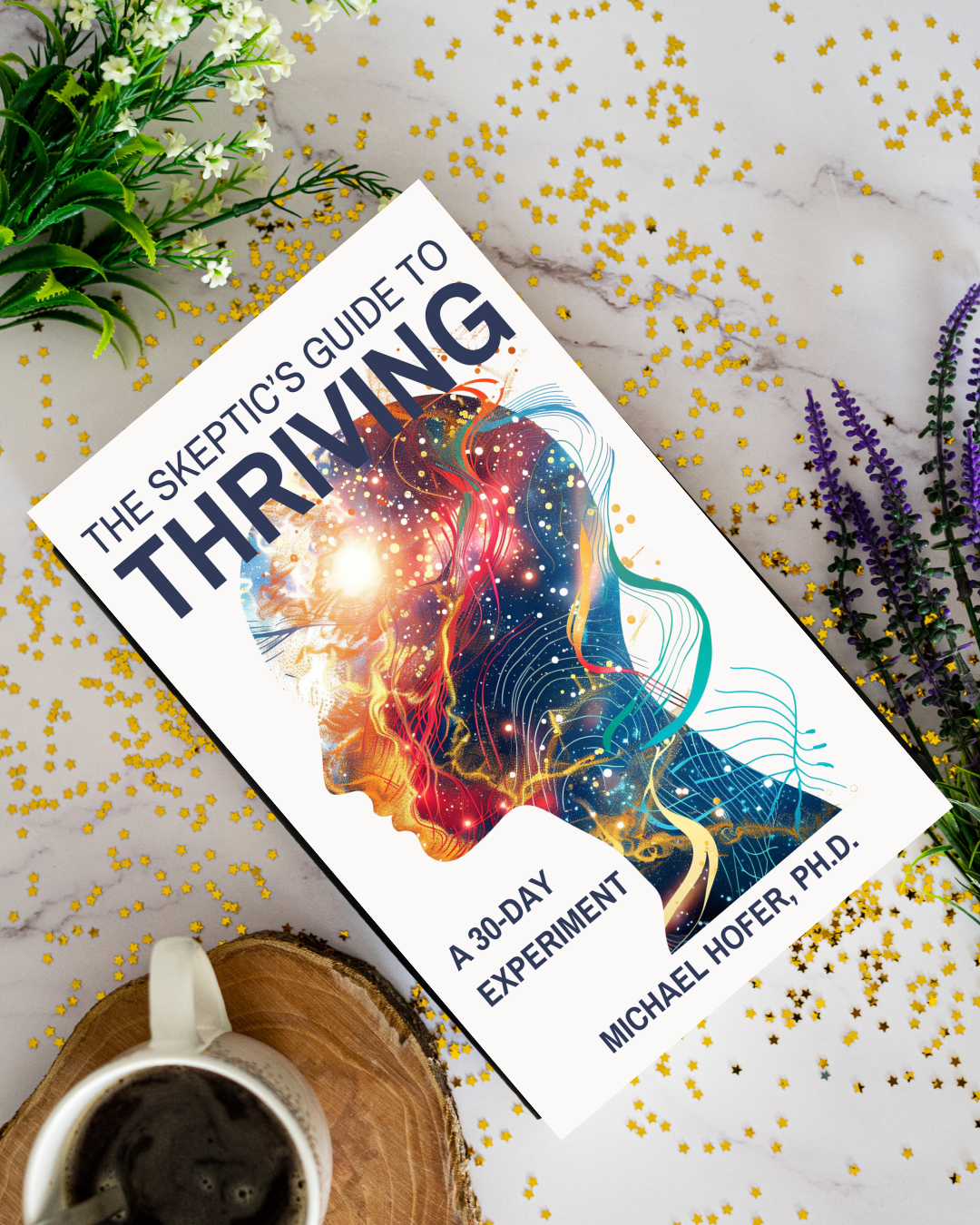
In The Skeptic's Guide to Thriving, I describe what neuroscientists have confirmed, but most of us prefer to ignore: your subconscious mind controls approximately 95% of your daily actions. Not your intentions. Not your goals. Not the carefully reasoned decisions your conscious mind makes over morning coffee.
Your autopilot.
Think of it this way: you are the pilot of a highly sophisticated airplane. The autopilot — your subconscious — has been programmed over years and decades of experience, repetition, and conditioning. It knows exactly how to fly the plane based on every pattern it has ever learned. It is efficient, fast, and tireless.
Now imagine you decide you want to fly somewhere new.
You, the conscious pilot, take the controls and try to steer in a different direction. But the autopilot doesn't just hand over control because you asked nicely. It pushes back. Every single time. Because its entire job is to repeat what worked before. We did it yesterday. Let's do it again today. For most of us, yesterday determines today and tomorrow. It is a past-based life — and it runs on autopilot.
This is why willpower fails. This is why you can set the same goal in January for the fifth consecutive year and watch it dissolve by March. It's not a character flaw. It's a programming problem. Your conscious mind is typing commands into the computer while your subconscious is holding the mouse — and your subconscious wins. Every. Single. Time.
The only way to change the outcome is to go deeper than willpower. You have to reprogram the autopilot itself.
Why Daily Repetition Is the Mechanism, Not the Metaphor
Here's the good news: your brain is not fixed. Neuroplasticity — your brain's capacity to form new neural pathways — is real, documented, and available to all of us regardless of age or prior conditioning. But it requires one thing above all else: repetition. Not occasional. Not when convenient. Daily.
And there is a specific reason why the quality and consistency of that repetition matters so much.
When you enter a relaxed, alert state — what neuroscientists call the alpha brainwave state — something remarkable happens: the critical faculty that normally filters out information inconsistent with your existing beliefs temporarily softens. Your subconscious becomes receptive. New neural pathways can form more readily. This is the window. This is the moment when your visualization, your goals, and your identity rehearsal land somewhere deeper than your conscious awareness — not in your to-do list, but in the operating system itself.
But here is the part most people miss: this window is not self-sustaining. The moment you skip it — even for a day — the old autopilot reasserts itself. Not dramatically. Not all at once. But the weight of years of prior programming is always heavier than the weight of a few weeks of new input. The scale tips back.
When your days are calm, skipping a session costs you something small. When your days are chaotic — high-stakes decisions, competing pressures, emotionally charged conversations — you are drawing down reserves you haven't topped up. That's when the autopilot takes over at full throttle. And the autopilot flies by yesterday's map.
This is the counterintuitive truth behind that saying. The two-hour meditation on a busy day is not an indulgence. It is maintenance under load.
Dreams Don't Live on Autopilot. You Have to Install Them Daily.
Here's the deeper shift that changed how I approach my practice.
Your goals — your real ones, the ones that matter — don't live in the autopilot. They live in your conscious mind. You typed them in. But as long as they stay only there, they remain aspirations. The subconscious doesn't act on aspirations. It acts on what has been installed through repetition, emotion, and experience.
Daily practice — visualization in the alpha state, clear intention-setting, connecting with your goals emotionally every single morning — is the installation process.
It is how you move something from "I want this" to "this is who I am."
From aspiration to identity. From conscious wish to subconscious instruction.
Skip a day, and the installation pauses. Skip a week, and the old programming begins overwriting it.
The busy days — when everything is on fire, and everyone wants a piece of you — those are the days the autopilot is working the hardest. Those are the days when the old patterns are under the most pressure to reassert themselves. Those are the days your practice matters most. Not least. Most.
The Tool: The Minimum Effective Dose Protocol
I want to be practical about this, because I live in the real world. There will be days when 45 minutes is genuinely not available. The goal is not perfection. The goal is non-negotiable daily contact with your vision — even when the session must be shorter than usual.
Here's what I call the Minimum Effective Dose Protocol for your busiest days:
Step 1: Protect the Threshold (5 minutes) - Before you touch your phone, your email, or anyone else's agenda — take five minutes. Lie still, close your eyes, and breathe slowly until you feel your body settle. This simple act begins to lower cortisol and move your brain toward the alpha state. The rule is non-negotiable: nothing external enters your mind before your vision does. Not one notification. Not one glance at the calendar.
Step 2: See the Destination Clearly (5 minutes) - With your eyes still closed, step into your future self. Not the version of you managing today's fires — the version of you who has already arrived. Where are you? What does it feel like? What decisions are you making effortlessly from that place? Stay until you feel the emotion of it, not just the thought of it. Emotion is the language the subconscious understands. Facts don't reprogram the autopilot. Felt experience does.
Step 3: Set Your One Aligned Action (2 minutes) - Ask yourself: what is the single thing I can do today that my future self would be proud of? Not a to-do list. One thing. Write it down. Commit to it before the day hijacks you.
Step 4: Move It Into Your Body (3 minutes) - Stand up. Take three deep breaths. Move deliberately — a few stretches, a brief walk, or simply standing tall with intention. Your physical state shapes your mental state more than most of us realize. The state you carry into your first interaction is the state you create in that room.
That's 15 minutes. It is the minimum. It is not ideal. But 15 intentional, vision-anchored minutes are categorically different from zero, and on your hardest days, that difference is everything.
The Invitation
The reason I trimmed my practice that Tuesday morning wasn't a rational decision. It was the autopilot making a familiar choice: efficiency over depth, urgency over vision. The results were predictable. The autopilot flew the old route.
Your dreams don't ask for perfect conditions. They ask for daily contact.
The subconscious doesn't respond to intensity once a week. It responds to repetition, every day — especially on the days that feel like too much.
The busiest version of you is not the version that needs less practice. It is the version that needs it most.
So tomorrow morning, before your inbox, before your calendar, before anyone else's urgency becomes yours — give yourself those minutes. See where you're going. Feel what it means. Then go build it.
One day at a time. Every single day.